Mila Borak - Paper Conservator and Restorer at State Archives of Serbia
Could you introduce yourself and tell us how you became interested in paper conservation and restoration?
-Hello, I'm Mila; I'm a conservator by profession. I knew from a young age - even before I started school - that I would pursue some form of art in my life. The Faculty of Applied Arts was the logical choice. When I applied to the Department of Conservation and Restoration of Works of Art on Paper, only one other student and I had signed up; in other departments, the competition was twenty to one. It was simply fate.
You trained at the Faculty of Applied Arts in Belgrade. What did that education give you that still shapes your work today?
-I enjoyed my time at university; those were precious years. Having finished high school, I was finally able to dedicate myself exclusively to what I loved. Upon graduating, I realized that finding a job in my field was extremely difficult, but a dear colleague and I fought for every opportunity and never gave up. To this day, I perform my work almost exactly "by the book" - an approach that has proven to be the best and safest, especially when dealing with the most challenging problems.
For readers who are not conservators, what actually happens when a damaged paper object first arrives on your workbench?
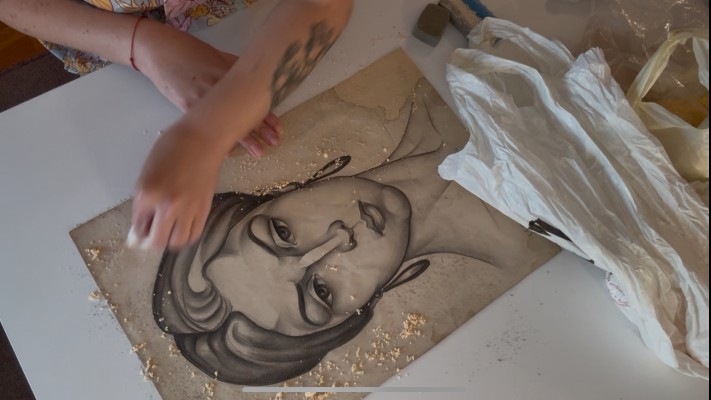
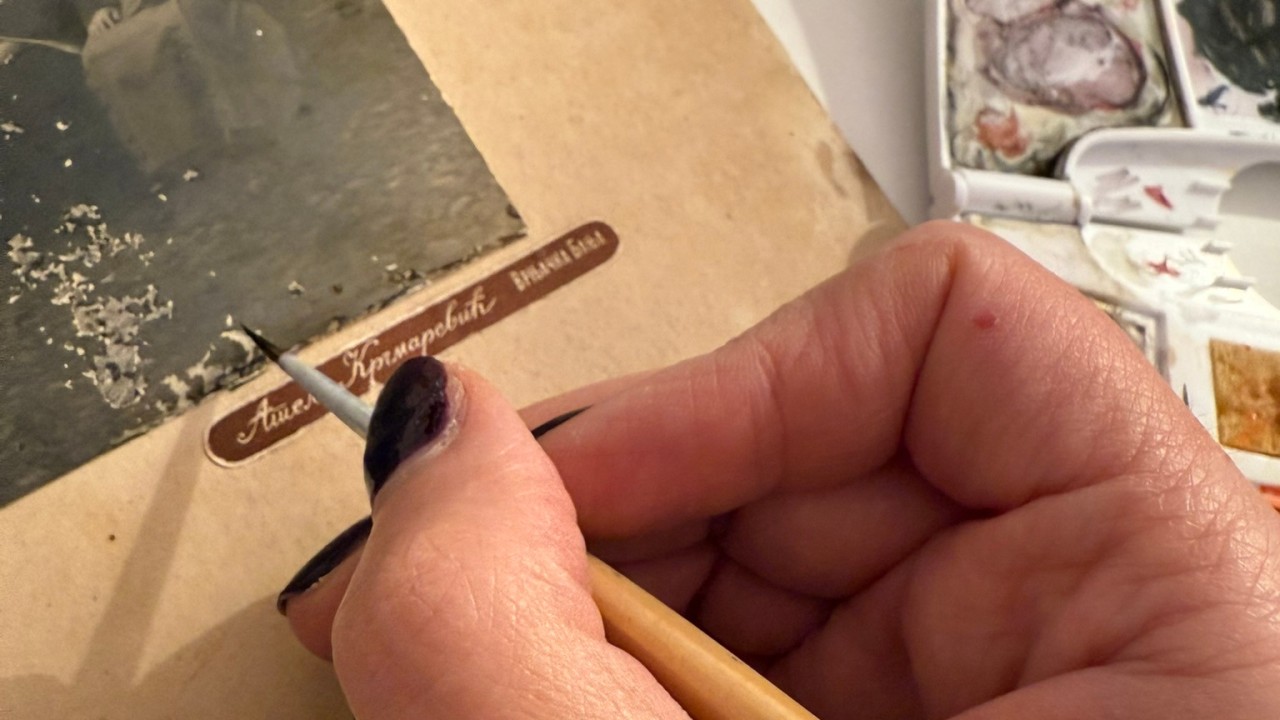
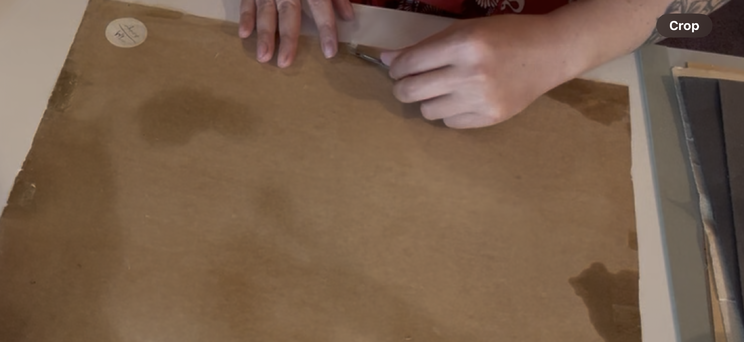
-First, we do photo documentation. We then begin mechanical cleaning using powdered erasers, cotton swabs, standard erasers of varying softness, or sponges, depending on the paper's brittleness. One of the most crucial steps is testing the solubility of all inks and pigments against various solvents, such as water, alcohol, or white spirit. Over time, paper becomes acidic; immersing it in a water bath helps reduce this acidity and slows the aging process - which is precisely why testing ink solubility is so important. If the inks are water-soluble, specific fixatives can be used, though sometimes the only option is gentle cleaning with cotton swabs soaked in alcohol or white spirit. As technology advances, the work of conservators becomes more rewarding and easier; for instance, I recently worked with nanogels and specialized solvents that clean effectively while being almost entirely safe for the inks. Now that the object has been cleaned and conserved, we move on to restoration - filling in missing sections or repairing tears. The paper used for filling is handmade Japanese paper, available in various thicknesses and colors, and methyl cellulose is used as the adhesive. Sometimes consolidation is performed, while at other times reinforcement is required - specifically, adhering the original paper to an additional support or backing sheet; this process is known as lining. The next step is pressing. Occasionally, retouching is necessary; this usually involves toning to create a sense of visual unity, rather than redrawing or repainting the missing sections.
You work with many different kinds of paper heritage: letters, posters, architectural plans, watercolours, drawings, prints, and books. Which types of objects are most technically challenging, and why?
-When it comes to conservation and restoration, in my experience, the most difficult and challenging objects to work on are those made from the lowest-quality paper. Papers of this type are brittle and acidic; they are most often made from wood pulp. Furthermore, unstable colors are generally challenging to work with. So, it is not a question of the type of artwork, but rather the materials from which it is made.
You mentioned soluble inks and pigments as one of the big challenges in conservation. How do you decide what treatments are safe when an object is fragile or unpredictable?
-When dealing with colors, we make decisions by first performing solubility tests on a small sample. If the colors are soluble in a particular solvent - such as alcohol - we will not use that solvent; instead, we will use a different one in which the colors are insoluble. As for the carrier - or the paper itself - there are various types of backing sheets or papers that keep the object securely fixed and stable during the work process. Practice and experience also play their part.
Many archivists and librarians know the pressure to “repair” something so it looks complete. How do you decide where conservation should stop and where over-restoration would begin?
-That’s an excellent question. That is precisely why we strive to adhere to the principle of minimal intervention. Of course, it isn't that simple, especially when dealing with severely damaged objects. The wonderful thing about restoration is that every procedure is reversible; it is a process that requires a great deal of patience, and we achieve results through small steps.
Could you tell us about your work on Milan Zloković’s architectural drawings? What made that project especially interesting or difficult?
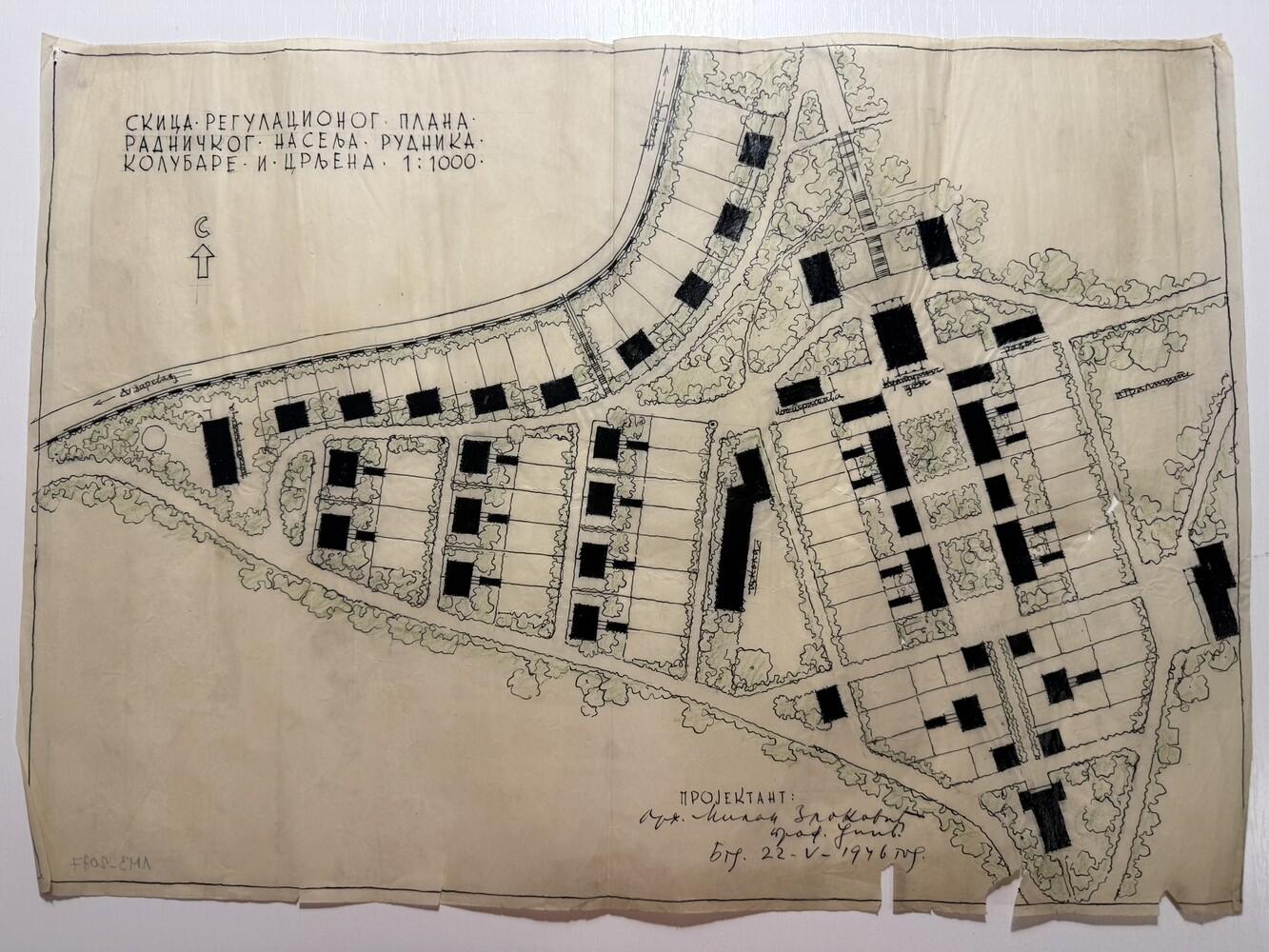
-The City Museum acquired the entire legacy of Milan Zloković, our great architect. The curator in charge of this collection hired my colleague and me as conservators. This collection includes hundreds of architectural drawings on tracing paper, blueprints, plans, designs, sketches, and so forth. They were mostly large-format pieces. Carrying out their conservation and restoration was generally enjoyable, and it was a great honor for me to be a part of it.
What is one thing archivists, librarians, or collection managers could do differently to help conservators preserve paper collections for the long term?
-Preventive preservation is extremely important, as is the careful handling of items. Specifically, here in Serbia, people have a habit of licking their fingers to make turning the pages of a book easier -the mere thought of it makes me shudder 😊. Adhesive tapes used to be common, though they are used less frequently today. Of course, when the use of tape is necessary, it must be special archival tape - such as filmoplast - rather than the ordinary adhesive tape bought in stationery stores.
You work in Serbia, where cultural heritage institutions may face budget and resource limitations. How do Serbian conservators maintain international standards despite those practical challenges?
-The truth is that the budget allocated for culture in our country is quite small; unfortunately, we are not a wealthy nation. However, people working in the cultural sector possess a deep love for art and its preservation. Careful investment and management of funds, combined with persistence and expertise, are the ways we manage to preserve art and culture.
How do you see the relationship between physical conservation and digitization? Does digitization reduce risk, or can it create new pressures on fragile material?
-Digitization is rather important when it comes to the preservation of cultural heritage. In this way, the originals remain completely safe while still being accessible to a wide audience. Naturally, expert and careful handling is of crucial importance during the digitization process.
Your work seems to combine science, craft, patience, and art history. What personal qualities make someone a good paper conservator?
-What I learned at university is certainly valuable. Practical experience is even more valuable when it comes to conservation and restoration - in addition to everything you listed. Fundamentally, a love for art, patience, and practice are what a conservator needs, along with some knowledge of biology and chemistry.
Finally, what keeps you motivated in this work, especially when dealing with badly damaged or very fragile cultural heritage?
-Those are the kinds of challenges I love the most. The most damaged objects look the most beautiful once they have been conserved and restored.
What is one conservation myth you would like to correct?
-We cannot make anything look completely new - nor should we.
What tool or material in your studio do you rely on most?
- I cannot choose just one tool; they are all essential. There is a saying among our people: "Without tools, there is no craft."
What advice would you give to a young person considering conservation as a career?
-Just be brave; be patient and gentle. Nurture love.
Is there a particular object or project that changed the way you think about cultural heritage?
-Since I have preserved and restored many precious objects and works of art, I cannot claim that any single item changed anything; it is simply a matter of a way of life, so to speak.